Beyond the Screen: Why Every Great Video Starts on Paper
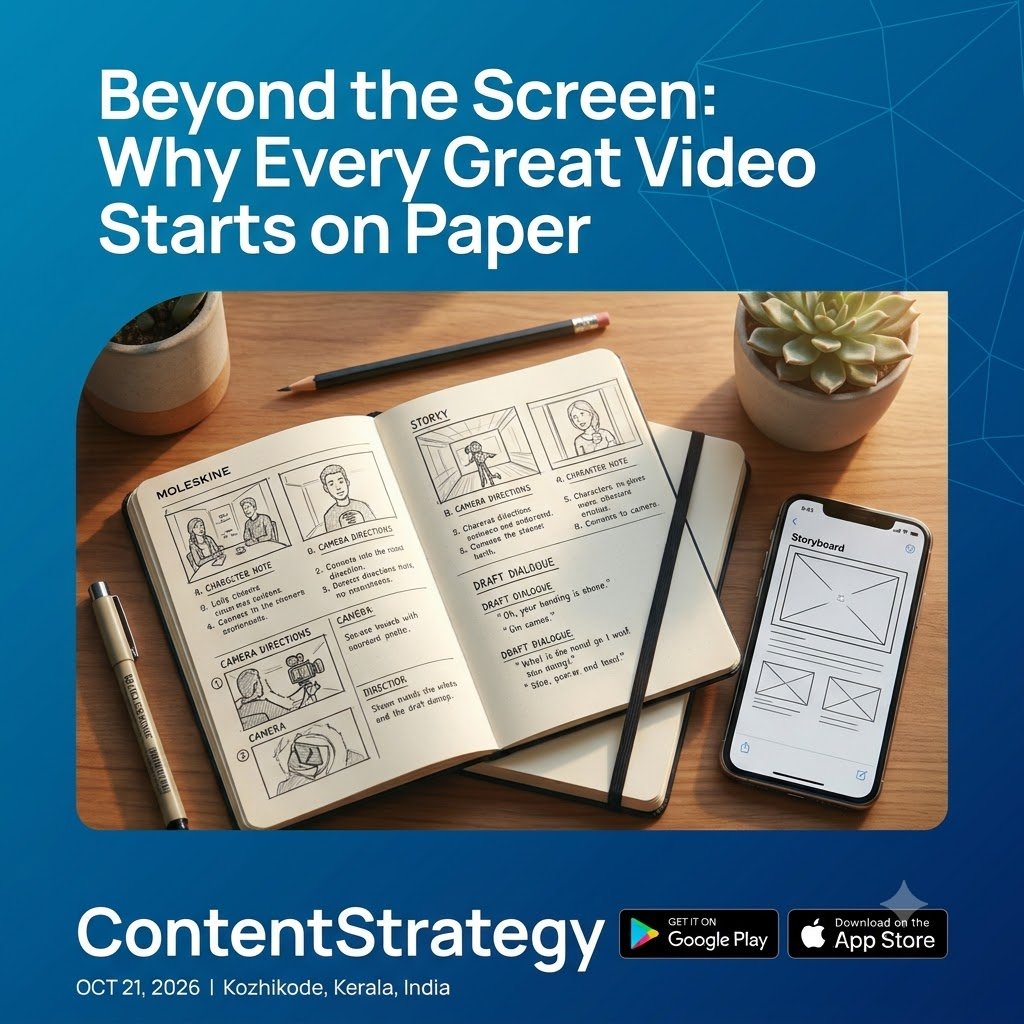
Have you ever watched a movie and completely lost track of time? You aren’t just looking at characters on a screen—you feel like you’re sitting right there in the scene with them.
That kind of magic doesn't happen by chance. Long before the lights are set, the cameras roll, or the actors take their positions, it all begins with something most viewers never get to see: the script.
Think of a screenplay as a blueprint. It gives the director, crew, and actors a shared vision—outlining what happens in every scene, what characters say, and how the story moves forward. Without it, filming would turn into pure guesswork.
This deep focus on storytelling is a big reason Malayalam cinema has built such a strong reputation. Many of its standout films rely on tightly written, thoughtful scripts. A good script isn't just words printed on paper—it’s what determines whether a story feels real or falls completely flat.
What Actually Goes Into a Screenplay?
If you need an easy way to picture it, think of a screenplay like a recipe. A recipe lists the ingredients and exact steps so the dish turns out right. A screenplay does the same for a visual story by spelling out:
What happens in every scene
Where the action takes place
The time of day
What characters do and say
When a script is messy or unfocused, the final video feels confusing to watch. But when it’s tight and intentional, the story glides along effortlessly. That’s the real job of a writer: making complex storytelling feel simple to the audience.
Most writers will tell you their early drafts are pure chaos—scrawled notes, crossed-out lines, and half-formed ideas scattered everywhere. That’s completely normal. You figure out the story through the mess so that what shows up on screen feels clean and focused.
Anatomy of a Scene
Screenplays stick to a simple, universal layout so anyone on a film set can read a page in seconds. Here is a quick look at a standard scene header:
INT. KOZHIKODE RAILWAY STATION - NIGHT
A crowded platform. RAHUL (19) stands alone, holding a worn-out bag.
Here is why each of those details matters:
Element
What It Means
Why It Matters
Scene Number
The sequence of the scene (1, 2, 3...)
Keeps production organized during shooting.
INT. / EXT.
Interior (inside) or Exterior (outside)
Tells the crew if they need a set or a location, which affects budget and gear.
Location
The specific setting (e.g., Kozhikode Railway Station)
Helps the production team scout the right spot.
Time of Day
Day, Night, Morning, or Evening
Sets the lighting, schedule, and overall mood.
Character & Action
Visual cues on appearance and behavior
Gives actors and designers immediate context.
Why This Matters Beyond Movies
The same principles that power a two-hour film apply to a short social media ad—just on a much tighter clock.
While a movie has hours to build a world, an ad often has less than 30 seconds. In fact, you usually have about two seconds to hold someone's attention before they scroll past. That means an ad script has to set a tone, deliver a message, and connect almost instantly.
A great example of this crossover is Prakash Varma. After more than two decades directing iconic Indian ad campaigns—like Vodafone's famous "ZooZoo" ads—he stepped in front of the camera in 2025 to play a police officer alongside Mohanlal in the Malayalam film Thudarum.
Whether writing a quick commercial or acting in a feature film, his work shows one thing clearly: strong storytelling works everywhere, regardless of the format.
The Core Goal of Any Script
At the end of the day, a script exists to make people feel something real. It takes an idea floating in your head and turns it into human emotion.
Whether you're writing for a theater full of people or someone quickly scrolling on their phone, the goal is identical: create a moment engaging enough that the viewer forgets they're looking at a screen and simply connects with the story.
If you have an idea, start writing it down. Every great video starts as a quick thought before it turns into a script.
(Interested in bringing your ideas to life? Exploring practical video production and content courses can help you master the whole journey—from first draft to final edit.)
Social Media Captions
Option 1 (Conversational & Punchy):
Great videos don't just happen on camera—they start on paper. 📝
Whether you're filming a 2-hour movie or a 20-second Reel, a clear script is what turns a basic idea into something people actually stop to watch.
We broke down how screenplays work, what makes Malayalam cinema's storytelling stand out, and how to apply film concepts to short-form content.
🔗 Read the full breakdown in our latest post!
Option 2 (Insightful & Story-Driven):
Ever wonder why some videos hold your attention while others get scrolled past in two seconds? It usually comes down to the script.
Writing isn't just about dialogue—it’s the blueprint for pacing, emotion, and visual direction. From iconic ad campaigns to feature films, strong scripts are behind every memorable frame.
Check out our latest post on scene structure and how film writing techniques can elevate your content.
